2 min readMINUTES
How Fast Should a Startup Website Load?

The short answer
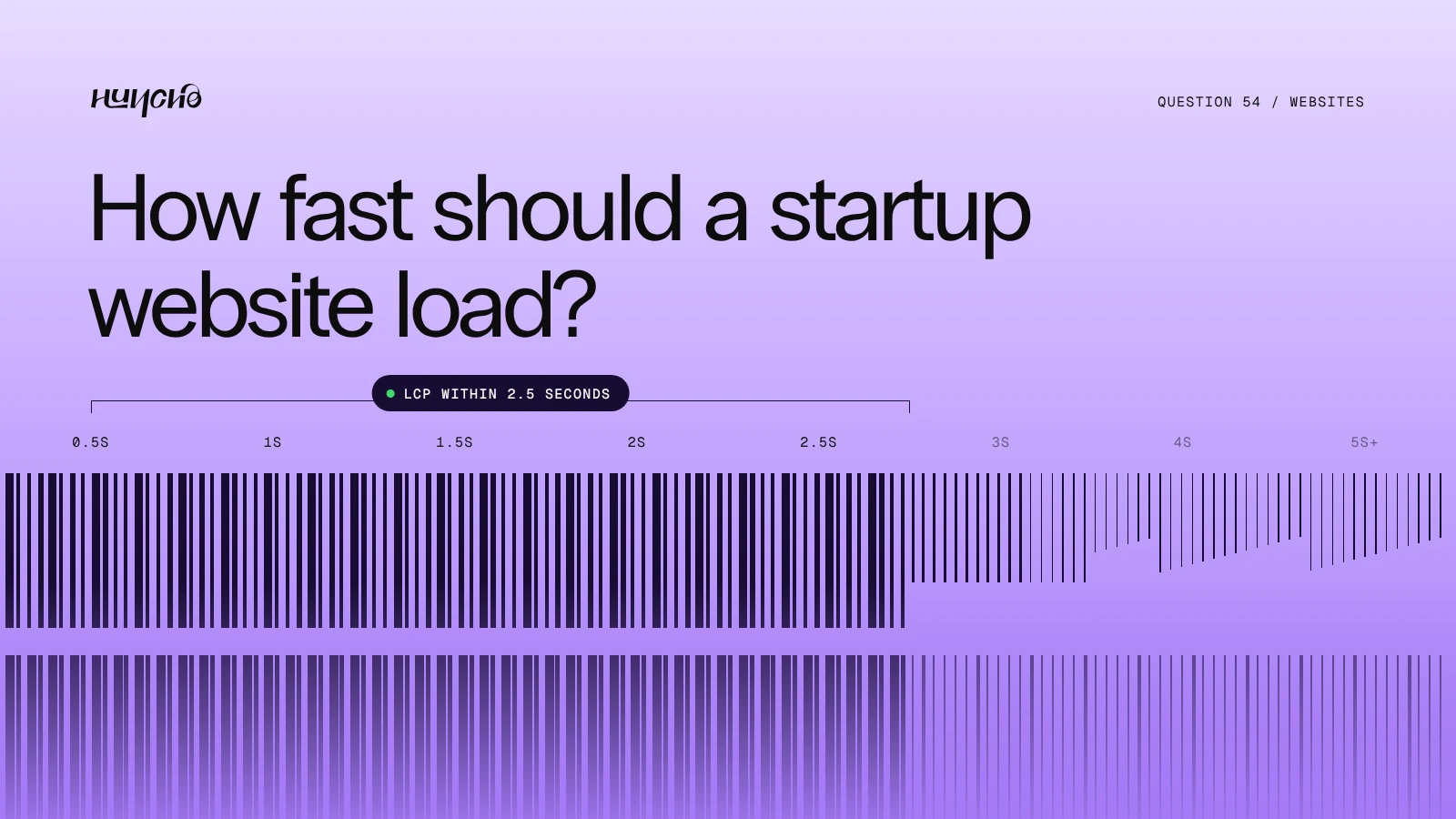
Aim for Google's Core Web Vitals targets: Largest Contentful Paint within 2.5 seconds, Interaction to Next Paint of 200 milliseconds or less, and Cumulative Layout Shift of 0.1 or less. Most slow startup sites are slow because of video and oversized images, not code.
Speed targets at a glance
- LCP: 2.5 seconds or less
- INP: 200 milliseconds or less
- CLS: 0.1 or less
- Typical weight: The median funded AI startup homepage we measured was 5.4MB
What slows startup sites down
- Video. The main reason pages in our study were heavy.
- Uncompressed images. Screenshots exported at full size.
- Too many scripts. Chat, analytics and tracking tags.
- Custom fonts. Many weights loaded at once.
Quick fixes
- Compress and lazy-load video and images.
- Serve modern formats such as WebP and AVIF.
- Remove scripts nobody uses.
- Load two or three font files, not ten.
- Test on a mid-range phone.
In our study of 50 AI startup homepages, 26 weighed more than 5MB. Studio Huncho builds in Webflow and Framer with performance in mind. See Webflow development.

Related reading: We Studied 50 AI Startup Homepages. Here's What They Have in Common., SaaS Website Design: 12 Best Practices (2026), Best Website Design Agencies for SaaS Startups (2026)
FAQ
Does speed affect SEO?
Yes. Core Web Vitals are part of how Google assesses page experience.
How do we test speed?
Use PageSpeed Insights, and check the Core Web Vitals report in Search Console.
Is Webflow fast?
It can be. Speed depends mostly on what you put on the page.
Site feeling slow? Send us the URL.
Work with Studio Huncho
We're a creative studio for AI and SaaS startups. We design brands, websites, products and launch videos, and build sites in Webflow and Framer.