2 min readMINUTES
What Is a Motion Identity?

The short answer
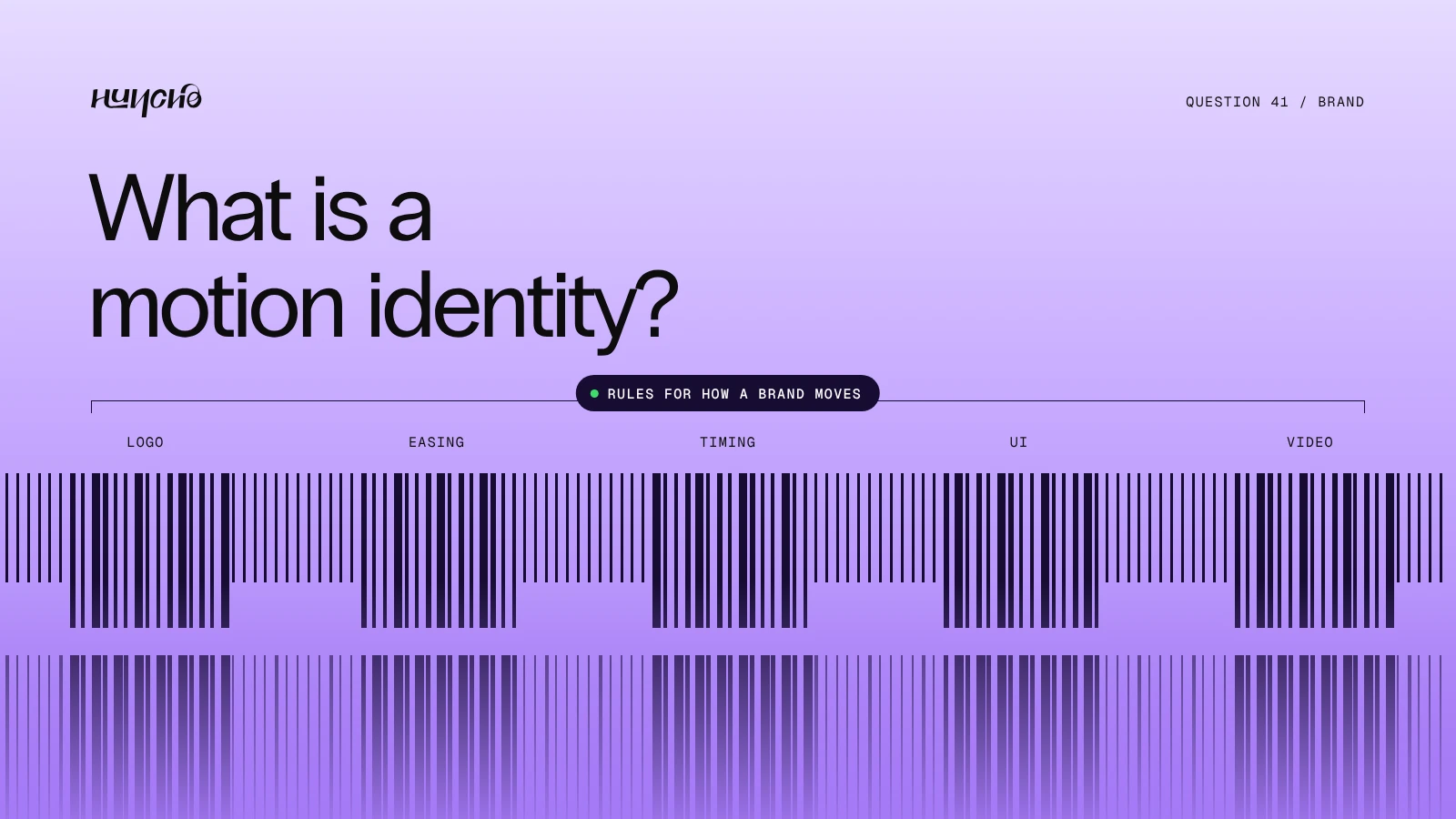
A motion identity is the set of rules for how a brand moves: how the logo animates, how elements enter and leave, and the speed and feel of transitions. It makes product, website and video feel like one brand, the way colour and type do for static design.
Motion identity at a glance
- What it covers: Logo animation, transitions, easing and timing
- Where it shows: Product UI, website, launch videos and social
- Who needs it: Companies that publish video or have an interactive product
- Output: A short motion guide with example files
What goes into one
- Logo animation. A short reveal for videos and loading states.
- Principles. Fast or calm, sharp or soft.
- Easing and duration. A few set values, reused everywhere.
- UI patterns. Hover, loading and page transitions.
- Templates. Titles and end cards for video.
Why it matters
Much of what people see of a brand now moves: scroll effects, product demos and social clips. Without rules, each one is animated differently and the brand feels unfinished.
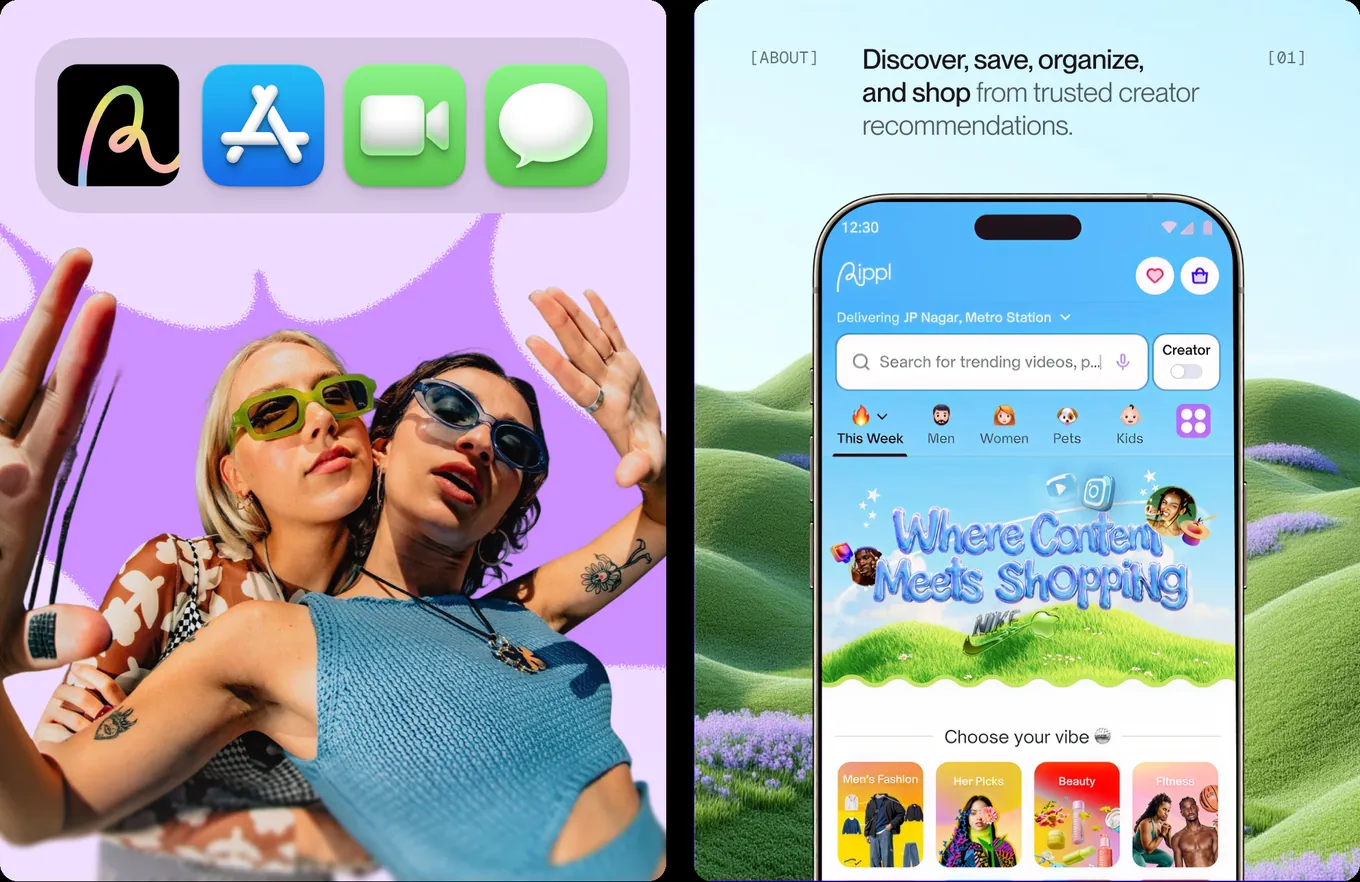
Studio Huncho builds motion into brand and website work for companies such as Further AI and Rippl, and makes launch videos and UI animation. See motion design.
Related reading: Dynamic Logos: Examples and Uses, Motion Graphics for SaaS, Best SaaS Branding Agencies (2026)
FAQ
Is a motion identity the same as an animated logo?
No. The animated logo is one part of it.
Do early startups need one?
A logo animation and two or three rules are enough at first.
Who uses the motion guide?
Designers, developers and video editors.
Want your brand to move well? Tell us where it will show up.
Work with Studio Huncho
We're a creative studio for AI and SaaS startups. We design brands, websites, products and launch videos, and build sites in Webflow and Framer.